
How can we learn to see landscape?
How can we learn to see landscape?
How art deepens our understanding of culture, place and ecological connection
By: Sabrina Careri
How can we learn to see landscape?
How art deepens our understanding of culture, place and ecological connection
The landscape as art
In this current era, defined by climate urgency and biodiversity loss, we know that the future of the natural world and its living systems depends on action informed by science and evidence-based policy. However, some would argue it also requires a renewed sense of awareness for our environment, or in other words, an ability to see landscape. But what does that mean? And how do we do that? For some, it starts by embracing creativity in its countless forms – changing perspectives, having empathy, and most importantly, using imagination.
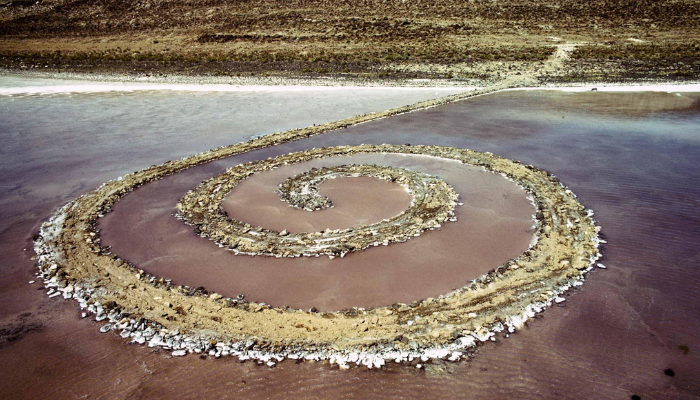
Art has long been a powerful tool for providing us with deeper and more diverse ways of seeing. When it comes to landscape, this is perhaps most obvious in landform art itself. Landform art invites us to slow down, notice patterns, and reconnect with natural forms, textures, and even colours. Take Spiral Jetty, for example, the iconic earthwork created in 1970 by American landscape artist Robert Smithson. This piece extends into Utah’s Great Salt Lake. The jetty doesn’t dominate the landscape; it moves with it – it gets submerged, revealed, and altered by salt crystals and the shifting water levels. What I appreciate most about this work is how it embodies the ephemerality of nature. It teaches us to see landscape as process.
And the same is true of the inverse – art depicting landscape. It doesn’t just show a place; it expresses relationships. When we engage with art that reflects these connections, we begin to understand landscape more emotionally. How do colours make us feel? How do textures make us want to scratch or itch? How do shapes remind us of wind, or a herd of animals moving together, or maybe a sudden swarm of butterflies?
Art within the landscape
This integration of art and scientific insight is central to Beyond the Edge, a new book by author, philosopher and scientist Ann Dale. Beyond the Edge contemplates how a single story of growth has come to dominate our narratives, and calls for an urgent cultural shift to create a future for sustainable regenerative living and reverse global warming. Developed over 25 years, the book is a comprehensive framework for nature-based climate solutions for Canada.
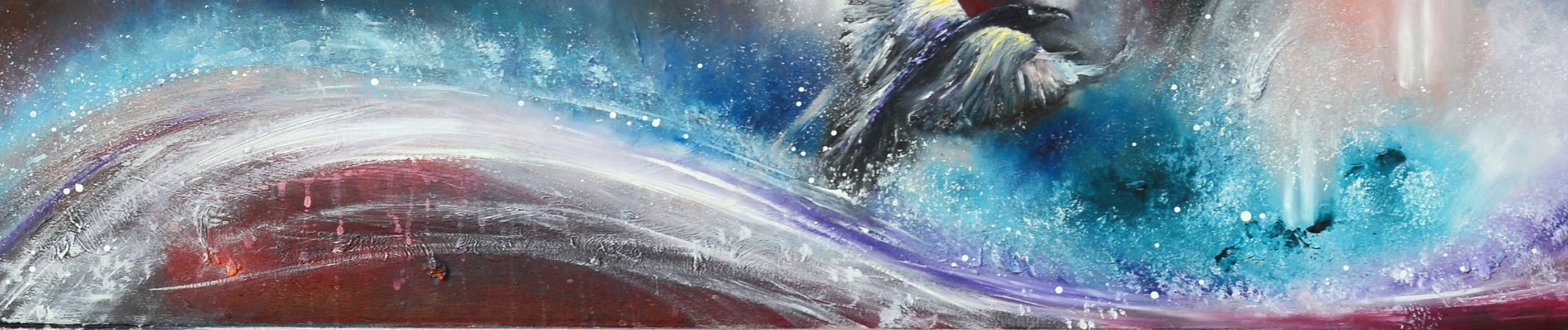
Beyond the Edge is enriched by powerfully sublime artwork from one of Canada’s leading atmospheric artists, Nancyanne Cowell. Using soft impression printing, each original painting introduces and subtly illuminates the hope found in each chapter. Knowing that the solutions to a crisis as vast as climate change needs to have an understanding of the human heart within it, the artwork profoundly captures our interconnection with nature. Nancyanne Cowell’s paintings illuminate the beauty of this relationship. “Where water and Earth caress,” she believes, “these paintings are an expression of love for living things, and an inspired vision of the eternal.”
Together, Dale’s writing and Cowell’s art remind us that addressing climate change and biodiversity loss requires more than solutions. It requires diverse ways of seeing. To explore landscape and its living systems through creative expression is to rediscover our place within it and cultivate a renewed sense of awareness. Beyond the Edge asks us to look, to feel, and then ultimately, to act.


