Documenting glaciers in retreat: What Canada’s melting ice means for wildlife and communities
Documenting glaciers in retreat:
What Canada’s melting ice means for wildlife and communities
By: Sabrina Careri
Documenting glaciers in retreat:
What Canada’s melting ice means for wildlife and communities
At the border of Alberta and British Columbia, in the center of the Canadian Rockies, lies one of the most iconic natural features of North American landscapes: the Columbia Icefield. Not only are these glaciers visually stunning, but they are critical components to Canada’s hydrological and ecological systems, feeding critical waterways that flow into the Pacific, Atlantic and Arctic oceans. Yet, as documented in a recent Narwhal photo essay, Inside a melting glacier, photographers race to capture what remains, the striking glaciers across western Canada are under threat and are experiencing rapid decline, presenting us with ecological consequences far beyond what is captured in the photographs.
The Meltdown project
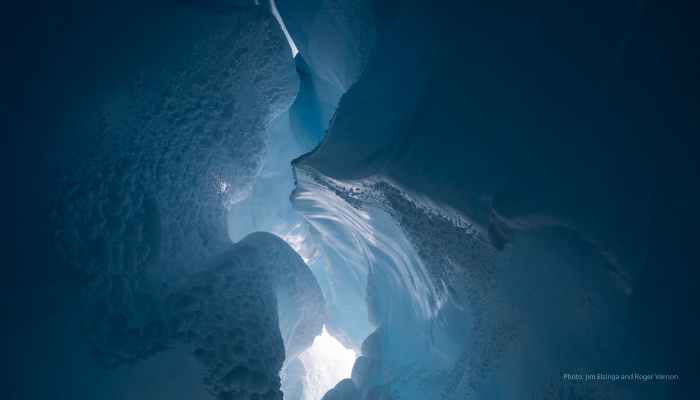
Since 2022, photographers Jim Elzinga and Roger Vernon have ventured into the Columbia Icefield to document the beauty of the glacial ice while it still exists. Their photography project, Meltdown, is part of a border initiative by the nonprofit Guardians of the Ice, which aims to raise public awareness on the consequences of glacial melting, by combining science and art to provide a visceral sense of what is at risk.
The Columbia Icefield under threat
Scientific research collected from 2021 to 2024 found that the Columbia Icefield glaciers are receding at nearly twice the rate of the previous decade due to rising temperatures, which are increasing melt rates, combined with low snowpack, and effects of wildfire smoke. If these conditions persist, Climate Change Canada warns, these glaciers could largely disappear by the end of the century.
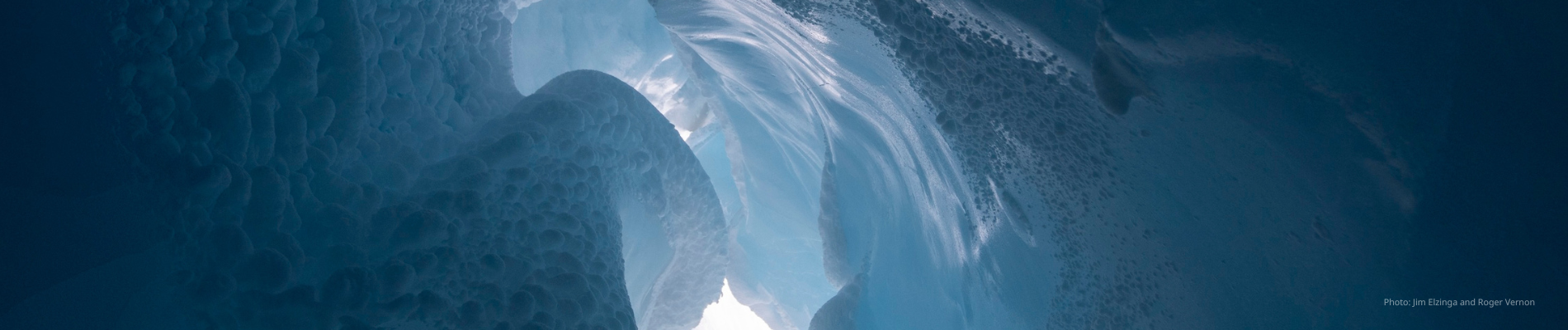
The article illustrates the striking beauty of the ice, especially inside moulins (vertical tunnel-like areas carved by meltwater), and emphasizes how quickly these formations are vanishing. The retreat of the glacial ice has far-reaching implications for biodiversity, and for ecosystems and wildlife across Canada at multiple scales. As glaciers recede, reductions in meltwater alter hydrological regimes and degrade water quality and habitat conditions, increasing pressure on water systems that sustain diverse biological communities, ultimately affecting human health, food security, and our long-term climate resilience.
Awareness and action through art
Photography and art, like the Meltdown project, serve as important reminders of not just the beauty and complexities of the natural world, but also of the cascading consequences we will face if we fail to act. While the threat of melting glacial ice may seem distant, the implications are not.
The health and longevity of these icy reservoirs influence water and food security, species survival and the integrity of ecosystems – all of which, are factors that ultimately affect our communities and our resilience to climate change. And although individual actions alone cannot stop glacial retreat, collective efforts combined with strong climate policies and governance can slow global warming, providing ecosystems and communities at least the opportunity to adapt.
Not everyone will have a chance to see every breathtaking landscape and natural feature like the glaciers in the Columbia Icefield in person, but because of projects like Meltdown, we can witness their story. When we share these images, we raise awareness and deepen our understanding of what is at stake in order to propel collective action. That’s why creativity and art are so important. Accessibility to information and awareness are the first step for meaningful changes that will protect and support the incredible systems that support us.