Mysterious orcas visit Vancouver’s harbour: A rare moment for biodiversity research in Canada
Mysterious orcas visit Vancouver’s harbour:
A rare moment for biodiversity research in Canada
By: Sabrina Careri
Mysterious orcas visit Vancouver’s harbour:
A rare moment for biodiversity research in Canada
A rare trio of orcas recently appearing in Vancouver’s Burrard Inlet is sparking excitement among marine researchers and wildlife observers. The sighting is helping scientists learn more about whale movements and the changing ecosystem conditions of the Salish Sea.
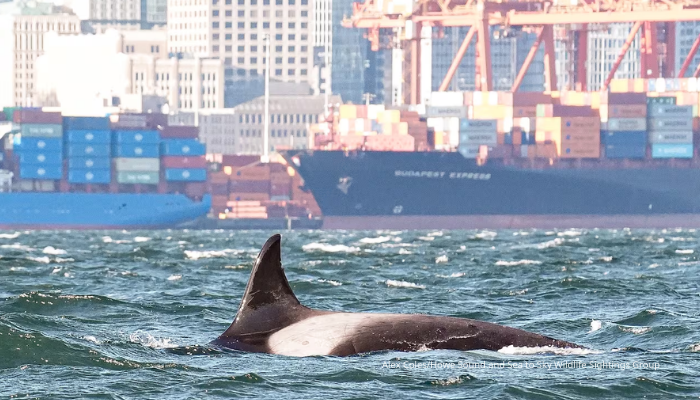
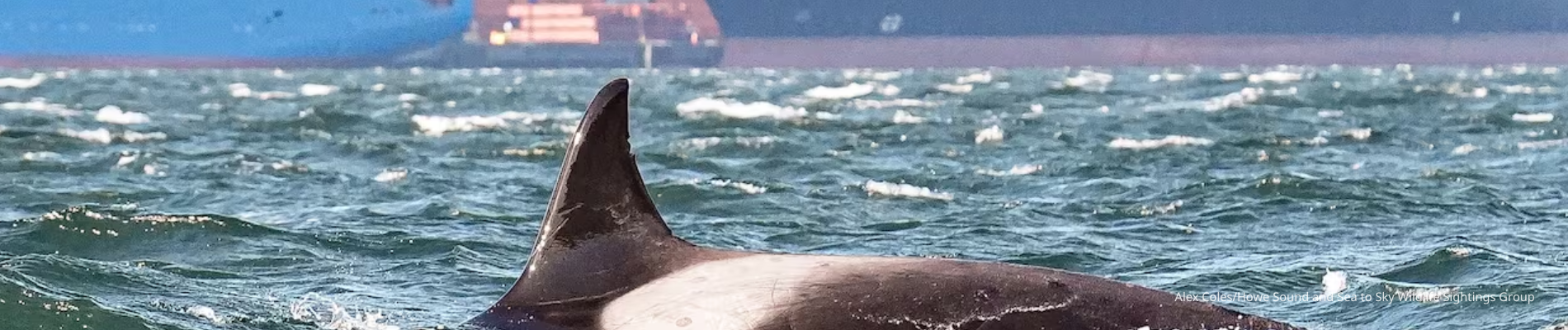
Nature news in Canada this week is buzzing with excitement following a rare and unexpected sighting of three killer whales in Vancouver’s Burrard Inlet, capturing the attention of researchers, wildlife watchers, and marine conservationists across the West Coast. A trio of orcas was first spotted late last week circling the waters of Vancouver Harbour, and photos and videos shared by the public quickly spread to wildlife communities, eventually helping scientists identify the whales and understand just how unusual this encounter is.
A first in over 50 years of research
What truly makes this visit so significant is that this is the first time a population of Bigg’s killer whales – other than the well-known West Coast transient population – has been documented in the Salish Sea in more than 50 years of whale research in British Columbia. The whales spent approximately four days in Vancouver’s waters before being spotted again near Seattle, continuing their journey along the Pacific coast.
Distinct markings on the whales helped researchers trace their identity based on clear scarring that is believed to be caused by cookie-cutter sharks – small sharks typically found in warmer offshore waters. These scars are commonly seen on killer whales photographed near the Aleutian Islands. Using these markings, researchers matched the whales to a trio that had been documented near Anchorage, Alaska, in March of last year, cataloging the whales officially as T419, T420, and T421.
Why are they here?
Species movements can reveal important clues about ocean health, food webs, and changing environmental conditions. Exactly why these whales travelled so far into the eastern North Pacific and into the Salish Sea remains a mystery, but scientists believe it is a clear signal of our changing ocean conditions causing shifts in prey availability and other ecological factors. Unexpected appearances like this remind researchers how dynamic marine ecosystems truly are.
The power of citizen science
Citizen observation has become an essential tool in conservation research. The story of the trio of whales and their discovery underscores just how important public participation is in wildlife and biodiversity research in Canada. Local wildlife observers photographed the whales and shared their images online, allowing researchers to quickly analyze the animals’ markings and confirm their identity. Using platforms such as iNaturalist.org and finwave.io, thousands of people are playing a new found critical role in conservation science documenting wildlife along the coast. Now scientists are able to gain access quicker to far more data compared to traditional research efforts alone.
Why does this matter?
Encounters like this illustrate how even in well-studied ecosystems like the Salish Sea, new discoveries are constantly emerging. In this case, unexpected species sightings provide critical new insight into how marine ecosystems function and how they may be changing in the face of evolving climate realities. One thing is for certain: understanding these movements is critical in protecting biodiversity along Canada’s Pacific coast and across the other interconnected ecosystems country-wide. The more information we have and can learn about species and their habitats, the better equipped we are to conserve them. For T419, T420, and T421, their journey has sparked curiosity, strengthened collaboration between the public and scientists, and renewed appreciation for the wildlife that shares our urban environments and the coastal waters surrounding them.