
Extinction is forever: If we don’t act now, what do we lose?
Extinction is forever:
If we don’t act now, what do we lose?
By: Sabrina Careri
Extinction is forever:
If we don’t act now, what do we lose?
The global economy depends on nature, and the rapid loss of biodiversity is putting that foundation at risk. A new IPBES report makes it clear that if businesses and governments fail to act quickly, nature’s decline will accelerate and the consequences will be irreversible.
Across the world, species are disappearing at an alarming rate, and scientists continue to warn that we are living through a twin crisis of climate change and biodiversity loss, threatening the ecosystems that sustain all life on Earth. Now, a new international report is sounding the alarm: the global economy depends on nature, and the rapid loss of biodiversity is putting that foundation at risk. If businesses and governments fail to act quickly, nature’s decline will accelerate and the consequences will be irreversible.
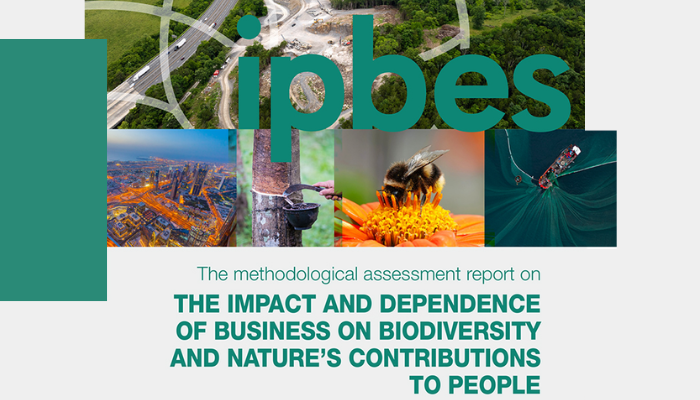
Released in February by the Intergovernmental Science-Policy Platform on Biodiversity and Ecosystem Services (IPBES), the Business and Biodiversity Assessment is a global report focused specifically on how businesses impact and depend on nature. Developed through the research of leading scientists and experts, the assessment sends a clear message that without major changes to the way economies operate, biodiversity loss will worsen, risking ecosystems and the long-term resilience of our communities.
When nature disappears
Over the past 50 years, ecosystem services — the benefits that nature provides such as pollination, carbon storage, and climate regulation, etc., — have declined dramatically due to human activity. When biodiversity declines, these systems weaken and the effects ripple outward, affecting food security, local economies, public health, and community well-being. For countries like Canada, where much of the economy is rooted in natural resources such as forests, fisheries, agriculture, and fresh water, biodiversity loss is both an ecological and an economic concern.
A hidden driver of biodiversity loss
One of the most significant findings in the report is the scale of government subsidies that continue to support activities driving environmental degradation. According to the assessment, trillions of dollars in global subsidies support industries and practices that contribute to biodiversity loss. In contrast, only a small fraction of funding is directed toward conservation and ecosystem restoration. This imbalance reveals a fundamental problem where economic systems fund activities that reduce environmental health, while also underinvesting in protection and recovery.
The cost of waiting
Protecting nature is no longer just an environmental priority, but it’s also a matter of economic stability, resilience, and long-term sustainability. The report’s release came just one week before governments gathered in Rome to begin the first global review of progress under the Kunming-Montreal Global Biodiversity Framework (GBF), adopted in 2022 to halt and reverse biodiversity loss and protect 30% of lands and waters by 2030.
Canada has committed to these global biodiversity targets, but meeting them will require meaningful action grounded in science. This means governments reforming harmful subsidies and strengthening policy, businesses assessing and reducing their impacts, and communities advocating for stronger environmental protection — alongside everyday individual actions that support and restore nature. The warning from scientists is clear, and the evidence continues to grow, but we still have time to change course, only that window is closing quickly. Protecting biodiversity means safeguarding the ecosystems that sustain our food, water, climate, and communities. Restoration is possible, but extinction is permanent, and the choices we make today will determine what remains.