
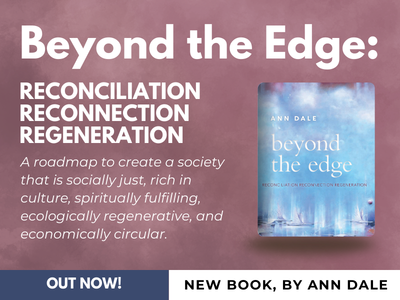
Many writers face the tyranny of the blank page, but we write because we believe our words can matter. Beyond the Edge emerged from that belief as a response to the climate and biodiversity crises that shape our world today.


Our goal is to raise awareness and increase literacy on biodiversity loss in Canada while emphasizing the need for immediate action. Our planet is currently facing a sixth mass extinction. Scientists have estimated that a number of species are at risk of disappearing 1,000 to 10,000 times their natural extinction rate with nearly 1 million species already threatened with extinction. If WE LIVE IN HARMONY WITH BIODIVERSITY and WORK WITH NATURE’S SYSTEMS, species will thrive, including humans.
Many writers face the tyranny of the blank page, but we write because we believe our words can matter. Beyond the Edge emerged from that belief as a response to the climate and biodiversity crises that shape our world today.
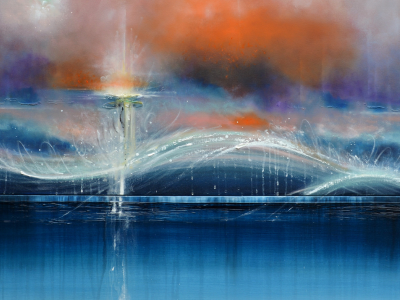
Beyond the Edge offers a bold vision for creating a socially just, culturally rich, and economically circular and regenerative future. Original paintings by Nancyanne Cowell illuminate the book’s ideas as an expression of love for living things and an inspired vision of the eternal.

Glaciers in Canada’s Columbia Icefield are retreating at unprecedented rates, threatening freshwater ecosystems, wildlife, and the communities that rely on them. But artistic projects are using photography to make this distant crisis visible, reminding us of the cascading effects of glacier loss.

Buddhist monks have set out on a journey to promote national healing and mindfulness. Accompanied by a devoted rescue dog named Aloka, their walk reminds us of how compassion can inspire change.
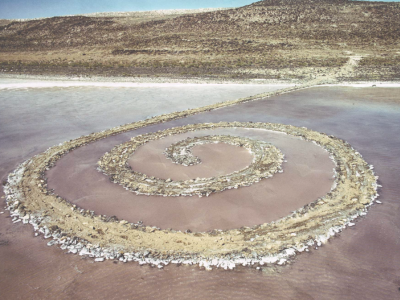
In an era defined by climate urgency and biodiversity loss, the future of the natural world depends not only on science and policy, but also a renewed ability to see the living landscapes around us.

How Ontario’s repeal of green-infrastructure standards undermines the climate-ready, adaptive, and biodiverse communities we actually need.

A new report commissioned by the Sierra Club BC, highlights how decades of logging, wildfires, and ineffective old-growth deferrals have left the British Columbia's primary forests fragmented and vulnerable.

Sea stars along B.C.’s coast are showing signs of recovery after a decade of devastating losses from sea star wasting disease. Scientists have made a major breakthrough in understanding the disease, offering hope for the restoration of these vital marine predators and the ecosystems they help maintain.

Today, September 30, on the National Day for Truth and Reconciliation, we honour the survivors of residential schools and remember the children who never returned home. This day calls us to reflect, to learn, to listen, and to take action — socially, politically, and environmentally.

Every evening in Vancouver, thousands of crows fill sky in a hauntingly beautiful ritual. From every corner of the city they converge into restless black clouds, flying eastward toward a communal roost. What at first feels apocalyptic, reveals itself as one of the city’s most remarkable natural spectacles and serves as a reminder that even in dense urban cities, nature continues to adapt, thrive, and surprise us.

In February 2019, we introduced our Biodiversity Action Agenda, developed from insights gathered during a four-part national conversation series on biodiversity conservation. A key theme that emerged from these discussions was the critical role of landscape connectivity.
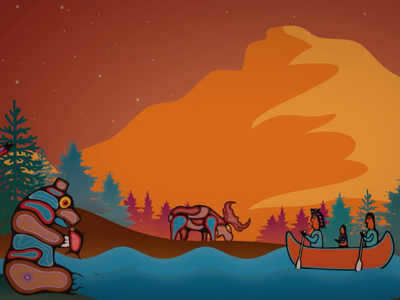
Back in February 2019, we launched our Biodiversity Action Agenda, which captured the collective insights of a four-part national conversation series on biodiversity conservation. The agenda set out a bold pathway for protecting biodiversity outlining recommendations in regard to strategies and plans, public engagement, policy, and political leadership.