
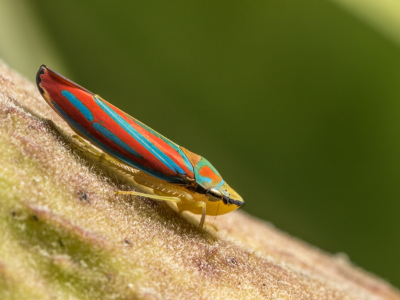
Insects have a PR problem. Sadly, many people think they're boring, gross, or even scary. But insects are actually the unsung heroes of our planet.


Our goal is to raise awareness and increase literacy on biodiversity loss in Canada while emphasizing the need for immediate action. Our planet is currently facing a sixth mass extinction. Scientists have estimated that a number of species are at risk of disappearing 1,000 to 10,000 times their natural extinction rate with nearly 1 million species already threatened with extinction. If WE LIVE IN HARMONY WITH BIODIVERSITY and WORK WITH NATURE’S SYSTEMS, species will thrive, including humans.
Insects have a PR problem. Sadly, many people think they're boring, gross, or even scary. But insects are actually the unsung heroes of our planet.

Biodiversity loss is felt most at the local level which is why conservation communication and action within communities have the most impact.

Can literature evoke empathy for nature? One group of researchers wondered if certain types of stories could bring about empathy and compassion for animals and nature.

As we self-isolate, social distance, and find new ways to connect with friends and family, now has never been a better time to learn more about nature.

One of the most effective micro responses to the climate crisis is to talk about it with others. This is what I learned after nearly 90 conversations.

Animal road crossings can ensure safe passage across dangerous highways for migrating animals as many travel through fractured habitat.

Ecosystem services enhance our wellbeing and freely provide the essentials for human survival like clean water, pure air, and nourishing soil.

Wetlands protect biodiversity, help communities adapt to a changing climate and are an essential part of our Canadian landscape.

Art has the ability to convey science in compelling ways which is why Leanne Cadden has joined NET as our artist-in-residence.

Co-benefits for biodiversity take place when strategies that are not directly related to conservation and enhancement help biodiversity.

Tracking plants, mammals, fish, amphibians, and invertebrates in Canada will help us better understand changes in biodiversity.

A reflection on “The Mushroom at the End of the World: On the Possibility of Life in Capitalist Ruins” by Anna Tsing.